3. ROLE OF APOPTOSIS
During ontogenesis, this mechanism enables the organism to eliminate those cells from the tissue that are mispositioned or already accomplished their transient role. Apoptosis does not induce damage to neighbouring cells.
|
|
|
|
|
Examples of apoptosis in development:
• Formation of tubular structures, e.g. lumen of the intestinal tract, or cavities.
• Membrane perforation (of oronasal, pharyngeal, urogenital or anal membranes).
• Formation of the slits between the fingers.
• During neurogenesis, superfluous neurons are generated. Neurons that became mispositioned or did not form synapses with their target tissue are eliminated by apoptosis.
|
|
|
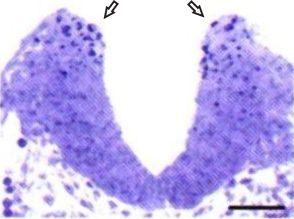
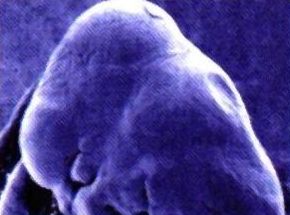
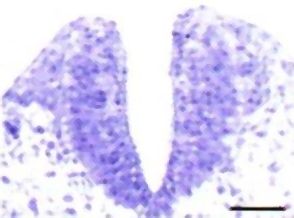
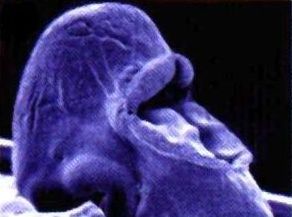
| If the number of eliminated cells prevails over the number of newly generated cells, e.g. as a result of teratogens, congenital malformations develop. |
|
|
| Neurotrophic hypothesis: Neurons that form synapses with their target tissue are protected against programmed cell death by a trophic factor that is produced by the target tissue. |
|
Examples of trofic factors:
• NGF (nerve growth factor) - trophic effect on sympathetic and cholinergic neurons
• BDNF (brain-derived neurotrophic factor) - supports motor neurons
• CNTF (cilliary neurotrophic factor) supports survival of motor neurons and parasympathetic neurons
• FGF (fibroblast growth factor) supports endothelial cells
• IL-5 (interleukin-5) supports eosinophilic granulocytes
|
|
|
| As the number of target cells is limited, neurons must compete to get their trophic support (competition).
In the adults, apoptosis takes part in:
- balance of tissue homeostasis,
- elimination of autoreactive lymphocytes in the thymus,
- involution of the endometrium or corpus luteum.
|